Queen of the Corn-market
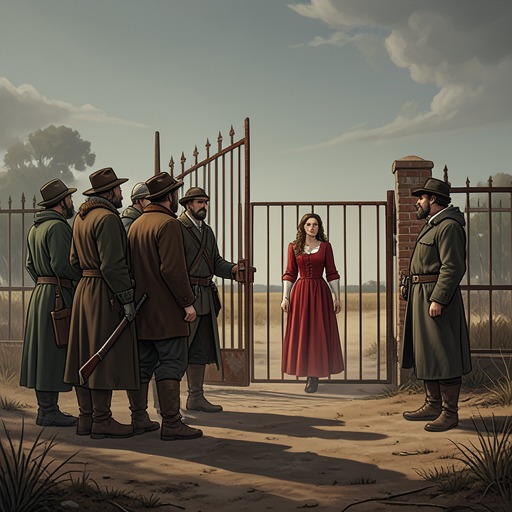
Far from the Madding CrowdThe Queen of the Corn-market is the nickname given to Bathsheba Everdene, linking her striking public reputation with her position as a working farm mistress. Sergeant Troy uses it to flatter her and to argue that her beauty draws many admirers into unreturned love; the phrase thus carries both social admiration and a warning about the burdens attached to it.
Origin and Meaning
The name reaches Bathsheba through Troy, who tells her that he heard her called the Queen of the Corn-market in Casterbridge. He presents the title as evidence that her beauty is widely recognized, and folds it into an elaborate compliment during their first extended conversation in the hayfield. Bathsheba resists his forwardness, but her acknowledgment that Liddy has said others consider her beautiful gives Troy an opening to treat the nickname as confirmation of his praise.
Troy then turns the compliment into a theory of consequence. In his account, an admired woman may attract many men while being able to marry only one; the rest, he claims, can be left unhappy, and the women they might otherwise have married may suffer too. His speech makes the title more than a flattering label: it casts Bathsheba’s beauty as a social force whose effects reach beyond the woman who possesses it. The narrator marks this conversation as a turning point, with Bathsheba’s guarded response revealing an unacknowledged capitulation to Troy’s attention.
Bathsheba’s Public Identity
The title sits beside a less romantic fact: Bathsheba is the mistress of a farm who intends to govern it herself. When she first addresses her workers, she announces that she has dismissed the bailiff for theft and will manage the farm with her own head and hands. She promises to rise early, oversee the work, and judge unfair conduct without yielding to assumptions about her competence because she is a woman. Her authority is stated publicly, in the same hall where she keeps the time-book and pays the workers.
Her independence is exercised through detailed agricultural oversight, not merely asserted as a principle. At sheep-shearing she watches for careless cuts and checks that the sheep are shorn closely; she corrects a worker who lets a finished sheep rejoin the flock without marking it with her initials. The nickname’s association with the corn market therefore overlays an identity grounded in management, labor, and responsibility for the farm.
Admiration and Its Costs
Troy’s use of the title is part of his courtship, not neutral description. He has come to the hayfield to work voluntarily, then turns that service into an opportunity to praise Bathsheba and keep her in conversation. His rhetoric makes her beauty seem at once a distinction and a burden, while his own role as a likely victim of unrequited admiration is folded into the argument. The narrator presents the scene as the moment when his flattery begins to take hold of Bathsheba, even though she has not openly accepted his claims.
The wider plot complicates Troy’s claim that beauty brings sorrow to its admirers. Bathsheba’s independence and public visibility attract attention, but the language of admiration does not guarantee the respect or security that her farming responsibilities require. After marrying Troy, she remains at Weatherbury Upper Farm while his authority increasingly governs the household and farm. Her confidence in her position becomes uncertain: she worries about the legal effect of marriage on her tenancy and recognizes that losing the farm would bring poverty. The title’s regal suggestion consequently contrasts with the vulnerability of a woman whose practical command can be unsettled by marital circumstances.
Recurrence and Narrative Significance
The nickname returns in the harvest-revel episode, where the contrast between public display and practical judgment becomes sharp. Troy, now acting in his wife’s place at the farm, declares the gathering both a harvest celebration and a wedding feast, and proposes serving the workers brandy after they have already had enough. Bathsheba objects and asks him not to do it; he dismisses her concern, sends the women and children away, and threatens the men’s winter employment if they refuse to stay. The scene shows how little protection the language of a queen provides when her authority is being displaced within her own farm.
The larger narrative also places Bathsheba’s reputation against the rhythms and material risks of rural life. During the shearing, she is an active observer of labor; before a storm, Gabriel Oak reads the signs in the flock and calculates the value of the threatened ricks at £750, while Troy rejects his warning. Such episodes show that the farm’s fortunes depend on practical knowledge and decisions, not on the public image condensed in a flattering title. At the annual sheep fair at Greenhill, Bathsheba’s and Boldwood’s combined flocks form part of a conspicuous rural gathering, returning the story to the agricultural world in which her public identity first acquired its market-centered name.
As an expression, the Queen of the Corn-market holds admiration and irony together. It makes Bathsheba visible as a celebrated beauty, but the story repeatedly sets that visibility beside her work, her claim to manage the farm, and the precariousness of her married position. Troy’s compliment predicts emotional consequences without understanding the full economic and personal costs that the title’s apparent glamour conceals.